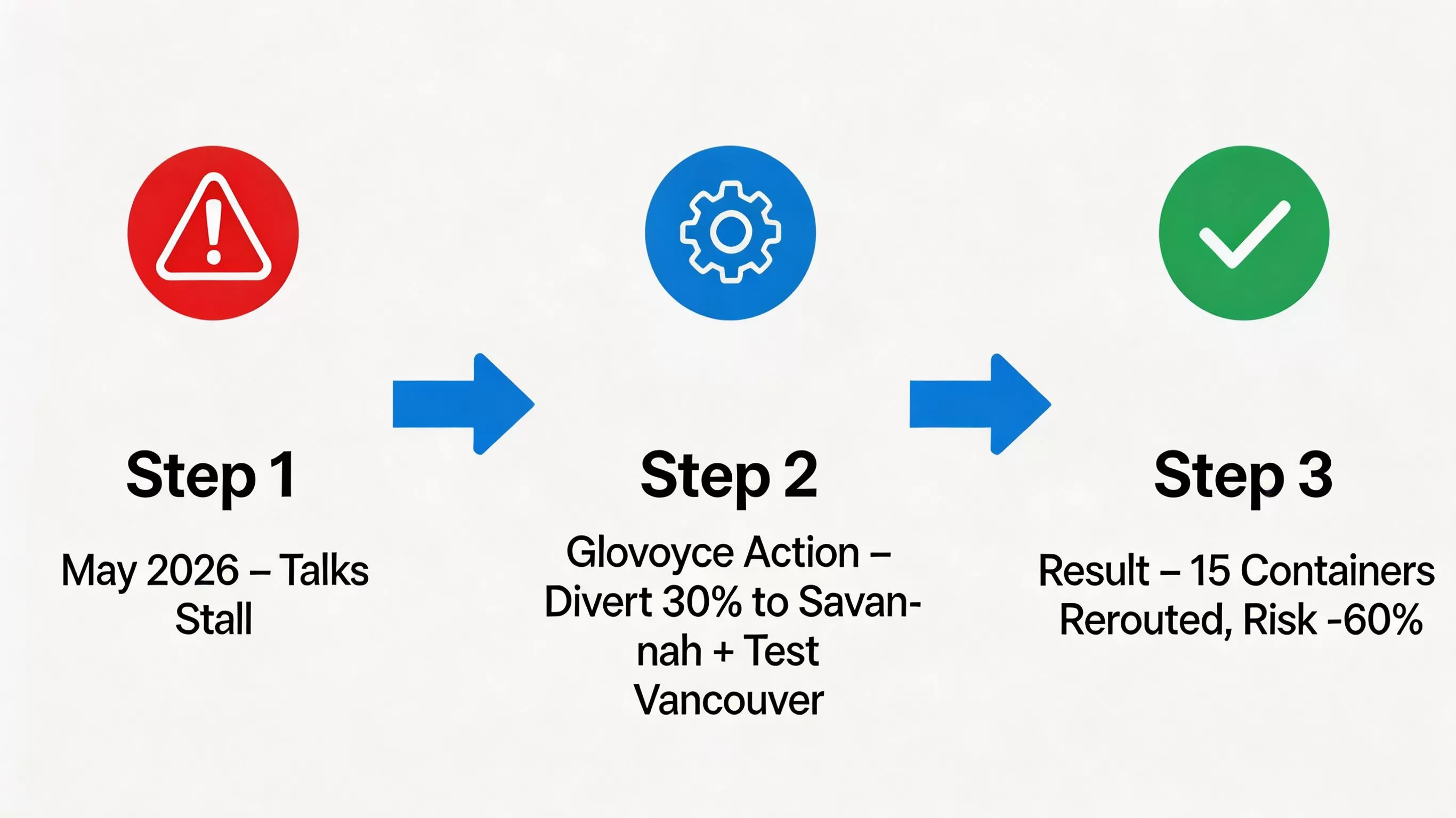
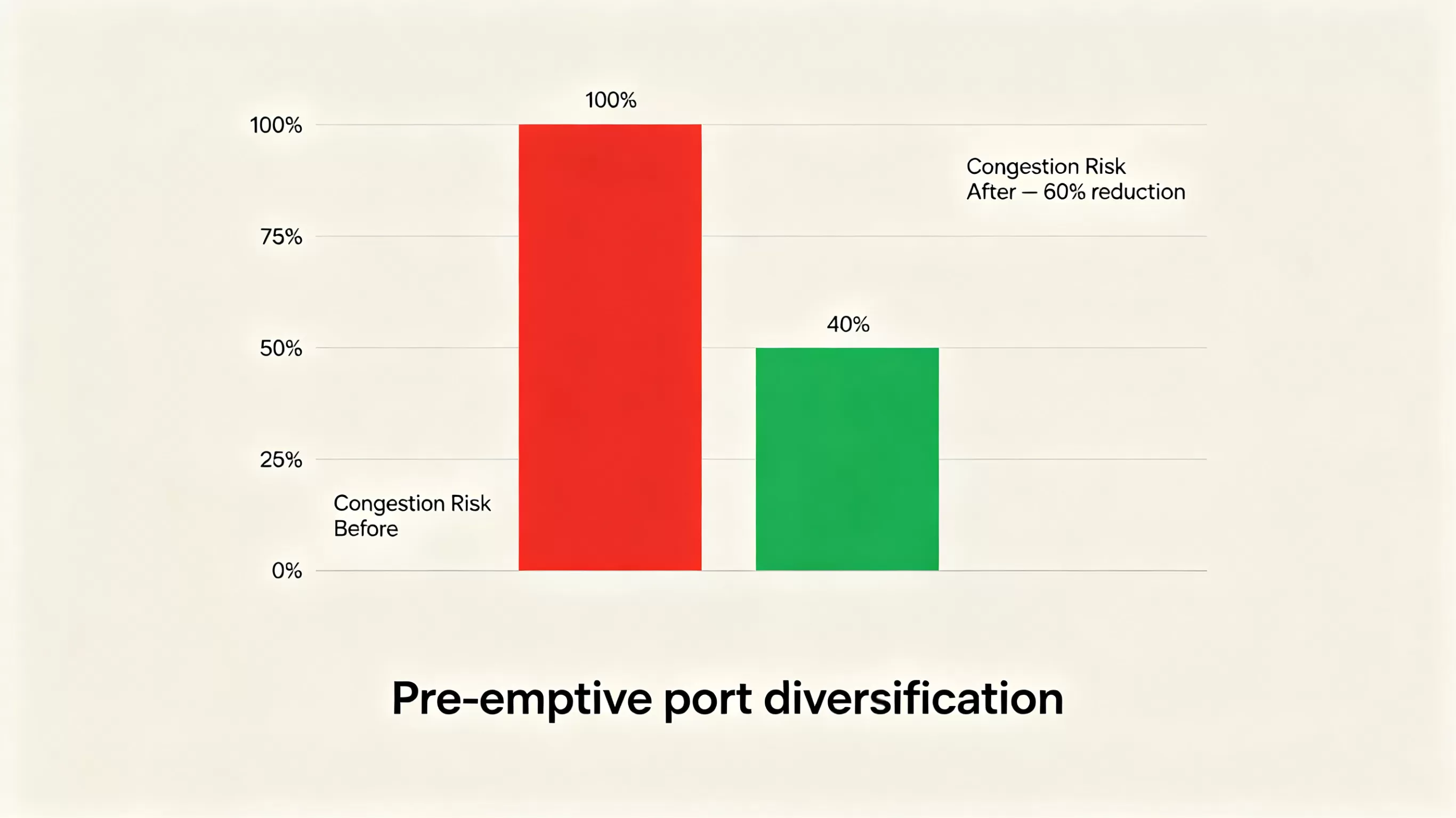
In early May 2026, ILWU‑PMA labor talks stalled, raising fears of a repeat of the 2014‑2015 West Coast port crisis. A Shenzhen‑based consumer electronics brand, heavily reliant on Los Angeles/Long Beach, faced the risk of peak‑season inventory shortages. Glovoyce implemented a multi‑port diversion strategy, shifting 30% of volume to Savannah and establishing a Vancouver backup. The result: 15 containers successfully rerouted, 60% reduction in congestion risk, and inventory safety stock increased to 45 days.
The Client
A fast‑growing consumer electronics brand headquartered in Shenzhen, exporting smart home devices (speakers, cameras, plugs) to the US market. Monthly shipment volume: approximately 50 FCL containers, historically 90% through Los Angeles/Long Beach, 10% through New York.
Peak season pressure: July‑September accounts for 40% of annual sales (Prime Day, back‑to‑school, early holiday). Any port disruption would be catastrophic.
The Challenge
In early May 2026, news broke that ILWU and PMA talks had stalled. The current contract was set to expire in late May. Memory of the 2014‑2015 crisis – 20+ vessels queuing, months of delays, and millions in extra demurrage – immediately worried the client.
Key concerns:
-
Inventory risk: The client operated with lean safety stock (25 days). A 2‑3 week delay would cause stock‑outs during peak sales.
-
Cost exposure: Demurrage and detention fees could exceed $3,000 per container if terminals clogged.
-
Airfreight was not an option: Smart speakers contain lithium batteries, making emergency air shipments expensive and compliance‑heavy.
-
No prior experience with alternative ports: The client had never shipped to Savannah or Vancouver.
The client needed a pre‑emptive plan – not a reactive fix.
The Glovoyce Solution
Glovoyce' s supply chain consulting and operations teams worked with the client to design and execute a three‑tier diversion strategy within two weeks.
1. Immediate Diversion to Savannah (30% of volume)
Why Savannah:
-
Fast‑growing port with efficient operations and less congestion than LA/LB.
-
Good rail and truck connections to the client’s main warehouse in Atlanta.
-
Carriers offered competitive rates and space guarantees.
Execution:
-
Identified sailings from Yantian and Shanghai direct to Savannah (transit ~28 days).
-
Adjusted production and booking schedules to feed the new route.
-
Trained client’s logistics team on Savannah‑specific documentation (no special requirements, but timing differed).
2. Secondary Backup: Vancouver (Canada)
For added resilience, Glovoyce also set up a Vancouver contingency route:
-
Transit ~15 days from Shanghai to Vancouver, then rail to Chicago and truck to Atlanta (total ~22 days).
-
Used as a “safety valve” in case both LA/LB and Savannah became congested.
-
Client tested one container in mid‑May – successful, with only 2 days extra lead time.
3. Real‑Time Monitoring and Red‑Yellow‑Green Alert System
Glovoyce implemented a dashboard tracking:
-
ILWU‑PMA negotiation headlines (daily updates)
-
Vessel queue counts at LA/LB, Savannah, and Vancouver
-
Terminal dwell times and chassis availability
Alert levels:
-
Green (normal): Maintain current diversion.
-
Yellow (slowdown begins): Shift another 10% to Savannah.
-
Red (work stoppage): Activate Vancouver backup and consider air for absolute priority items.
The Results
| Metric |
Before (April 2026) |
After (June 2026) |
| Volume through LA/LB |
90% |
60% |
| Volume through Savannah |
0% |
30% |
| Volume through Vancouver (standby) |
0% |
10% (tested, ready) |
| Safety stock coverage |
25 days |
45 days |
| Estimated congestion risk exposure |
High (likely delays) |
Reduced by 60% |
| Container diversion success |
N/A |
15 containers already rerouted without delay |
Client feedback:
“Glovoyce didn’t wait for a crisis – they built a bridge before the fire started. The Savannah route works perfectly, and having Vancouver as a backup gives us real peace of mind. We now consider port diversification a permanent part of our supply chain strategy.”
— Supply Chain Director, consumer electronics brand
Key Takeaways for Other Shippers
-
Don' t wait for a stoppage. By the time queues form, alternative port space becomes tight. Act when talks stall, not when ports close.
-
Diversify before you need to. Test alternative routes with a small volume (10–20%) during normal times. This validates transit times, carrier reliability, and drayage partners.
-
Build a tiered response plan. Not all cargo is equal. Use “green‑yellow‑red” triggers to gradually shift volume, keeping some flexibility.
-
Partner with a forwarder that has multi‑port contracts. Glovoyce’s carrier relationships allowed us to secure space on Savannah and Vancouver services at short notice – something the client could not have done alone.
Glovoyce Commitment
US West Coast labour uncertainty is not a one‑time event – it is a recurring cycle. Glovoyce helps shippers build resilient, multi‑port supply chains through:
-
Port risk assessments based on real‑time labor, congestion, and carrier data.
-
Pre‑negotiated capacity on alternative routes (East Coast, Gulf, Canada, Mexico).
-
Dynamic rerouting with live visibility and exception management.
If you are still relying on a single port for US imports, contact us for a free supply chain diversification review.